Engineering complex membrane structures begins with understanding the forces that create their form.
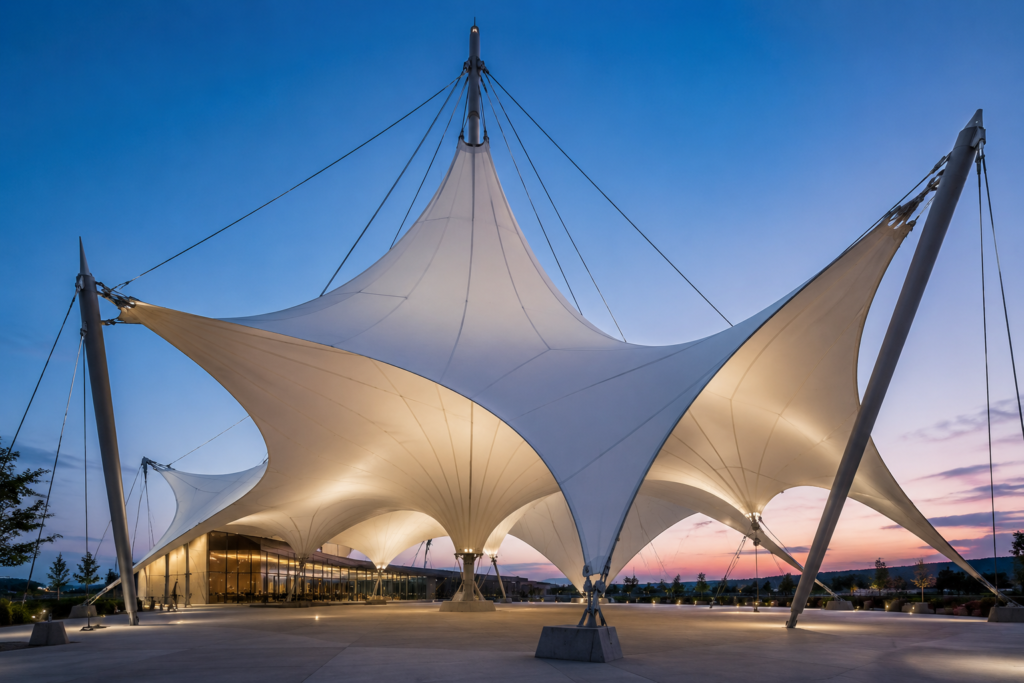
Textile architecture combines structural efficiency with exceptional geometric freedom. Yet behind every apparently lightweight membrane lies a precisely engineered system of membrane stresses, cables, supports, anchorage and load transfer.
At ZAPF Engineering, we develop textile membrane structures from the first geometric concept and form-finding through structural verification and detailing to fabrication-ready geometry. We also support the development of new concepts and existing ideas, transforming them into technically feasible solutions that can move toward fabrication and implementation.
Form-Finding: When Geometry Becomes Structure
Unlike conventional structures, the final geometry of a tensile membrane cannot simply be defined independently of its structural behavior. Its form develops through the interaction of boundary conditions, prestress, curvature and the forces acting within the membrane.
Form-finding establishes this equilibrium geometry. Starting from the architectural intent, required dimensions and support conditions, ZAPF Engineering develops and evaluates membrane forms that combine structural efficiency with the desired spatial and architectural expression.
This early engineering stage is fundamental: geometry influences stress distribution, material behavior, drainage, connection forces and ultimately the feasibility of fabrication and installation.
Structural Analysis: From Form to Verified System
Once the equilibrium geometry has been established, the membrane structure must be verified as an integrated structural system. The analysis considers the interaction between the membrane, prestress, cables, edge elements, masts, supporting steelwork and anchorage.
Project-specific load cases such as wind, snow and other relevant environmental and operational actions are evaluated to understand stresses, deformations and reaction forces throughout the complete system.
The objective is not simply to verify an individual membrane surface, but to develop a coordinated load path from the textile structure through its connections and supporting elements into the primary structure and foundations.
Materials, Connections & Detailing
The performance of a membrane structure depends not only on its geometry, but also on the coordinated design of materials, edges and connection details. Membrane properties, cable systems, clamping details, corner assemblies and supporting components must work together under the defined prestress and project-specific loads.
ZAPF Engineering considers these interfaces as part of the complete structural system. Particular attention is given to areas where forces are transferred between the flexible membrane and rigid supporting components, as these details can be decisive for structural performance, fabrication and installation.
From 3D Geometry to Fabrication-Ready Patterns
A membrane geometry that performs structurally must ultimately be translated into components that can be manufactured. This requires the three-dimensional membrane surface to be transformed into precise two-dimensional cutting patterns while considering the material behavior, compensation and fabrication requirements of the selected membrane system.
ZAPF Engineering develops the cutting geometry and fabrication data required to translate the engineered membrane form into individual panels. The objective is continuity from the verified 3D model through patterning and detailing to a solution that can be manufactured and assembled as intended.
Form-Finding → Structural Analysis → Detailing → Patterning → Fabrication
Engineering New Ideas into Buildable Solutions
Not every engineering project begins with a finished design. Sometimes it begins with an idea, an existing concept that needs further development, or a technical challenge for which no standard solution exists.
ZAPF Engineering supports this development process by combining structural engineering, practical fabrication knowledge and experience across membrane structures and industrial applications. Concepts can be evaluated, optimized and developed toward technically feasible solutions with a clear path to fabrication and implementation.
This approach allows engineering to become more than verification: it becomes a tool for turning ideas into real products, structures and applications.
Applications Beyond Conventional Textile Architecture
Textile membrane engineering extends far beyond conventional roofs and canopies. The same principles of form-finding, structural analysis and fabrication planning can be applied across a wide range of architectural and industrial applications.
ZAPF Engineering’s experience includes membrane roofs and canopies, stadium and infrastructure structures, railway and transport applications, cable-net systems, sunshades, yacht applications, stage coverings and specialized membrane solutions for industrial environments.
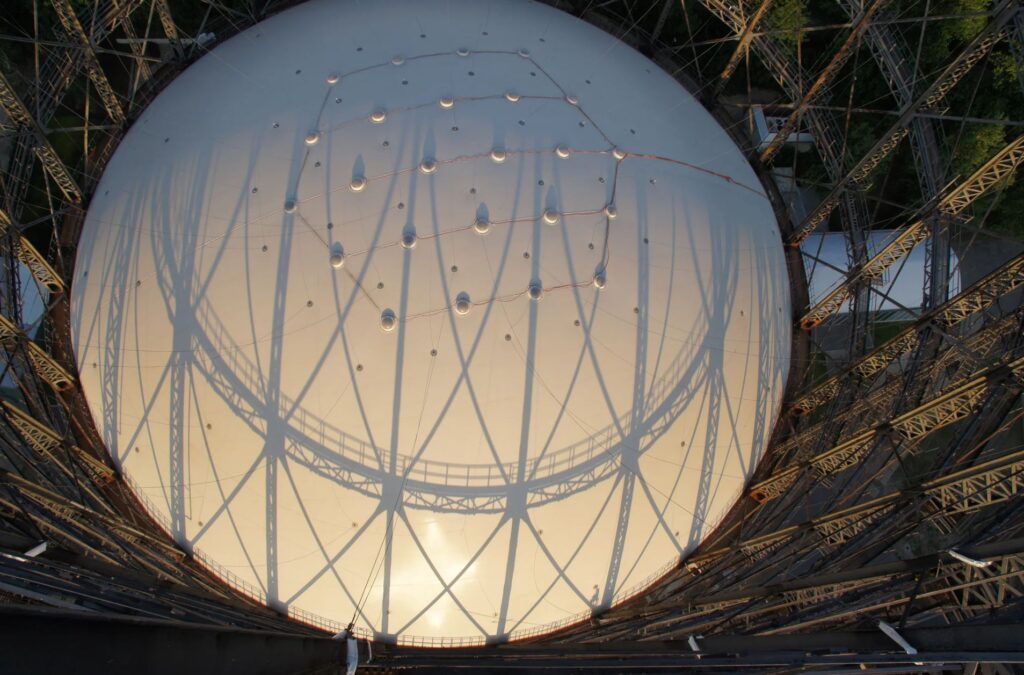
Depending on the project, structures may be mechanically tensioned or pneumatically supported and can range from elegant architectural surfaces to highly functional technical enclosures and protective systems. This breadth of experience allows engineering approaches developed in one field to inspire efficient solutions in another.
Materials & Membrane Systems
Different applications require different membrane materials and structural systems. ZAPF Engineering works with established textile and foil-based solutions including PVC-coated polyester fabrics, ETFE systems and glass-fibre-based membrane materials, as well as cable-net structures and their associated supporting components.
The appropriate material and structural concept depend on the geometry, loads, environmental conditions, architectural requirements and intended application. Engineering therefore begins with understanding the complete system rather than selecting a material in isolation.
Whether mechanically tensioned, cable-supported or pneumatically stabilized, each system requires its own approach to form-finding, structural verification, detailing and fabrication planning.
Have an Idea, Geometry or Engineering Challenge?
Some of the most interesting engineering projects begin before a final solution exists. They begin with an idea, a functional requirement or a technical challenge.
ZAPF Engineering supports clients, architects, manufacturers and project partners in developing these ideas into structurally sound, technically feasible and fabrication-ready solutions — from the first geometry through engineering and detailing to implementation.
Bring us the idea. We’ll help engineer the way forward.